Search

Accurate identification of pasture mealybug (Heliococcus summervillei) is closely tied to its developmental biology. Because adults are not thought to feed, scouting efforts should focus on immature stages. Pasture mealybug progresses through four nymphal instars before reaching adulthood. Most feeding occurs in the first two instar stages. Males and females are very similar in appearance in these early life stages and the first and second instars can be identified using body size and the density of fine waxy filaments or fuzziness. First instar nymphs are extremely small, measuring approximately 0.5 mm in length, although recent observations have documented individuals as small as 0.2 mm to 0.3 mm. At this stage they have very few hairs, if any, and are coated with a light waxy powder. With each successive molt, individuals increase slightly in size and develop a heavier wax coating. Second instar nymphs grow up to about 1.0 mm long and develop about 20 long hairlike waxy projections and a light cottony fuzz as they mature.
At the third instar, differences in morphology between males and females become more apparent. Third instar males do not grow significantly in size but begin transforming into a winged adult. They are approximately 1.1 mm long, have a more elongate body form, are slightly pink in color and develop small wing buds. In the fourth instar, males are only slightly larger, just over 1.1 mm long on average, are increasingly elongate in shape, pink in color and possess more developed, longer wing pads. In this stage the males are in a waxy cocoon and enter a pupa‑like stage before emerging as small, winged adults approximately 1.0 mm to 1.2 mm long (Figure 1). Note that some report the third and fourth instar as the same life stage.
Females retain their general appearance throughout their lifecycle. Third instar females are approximately 1.2 mm long, developing up to 40 hairlike projections and more cottony wax than second instars. Adult females are typically about 2.0 mm long, but reports range from 2.0 mm to 5.0 mm long. They possess as many as 70 body‑length hairs with a cottony fuzz coating and may exhibit a pinkish hue when mated.
Another useful indicator of insect age is the presence of exuviae from previous molts. Brown, membranous cast skins from previous molts are often found near active mealybugs.
Early instar pasture mealybugs are very difficult to detect due to their small size, especially in low population density, early-season infestations, and dense sugarcane canopies. Figures 1-4 illustrate representative nymphal and adult stages. These images can serve as a practical guide for identification, especially when used in conjunction with a jeweler’s lens to examine early instars.
If you suspect pasture mealybug infestation in sugarcane, please email Blake Wilson with the LSU AgCenter at [email protected] or the Louisiana Department of Agriculture and Forestry at [email protected].
References
Gosh, A.B. 1979. Studies of some mealybugs of economic importance.
Hauxwell C, Dickson G, Bryans E, et al. 2022. Final report B. PAS. 0004: Biology of pasture mealybug and identification of natural enemies.
Heliococcus summervillei. 2026.
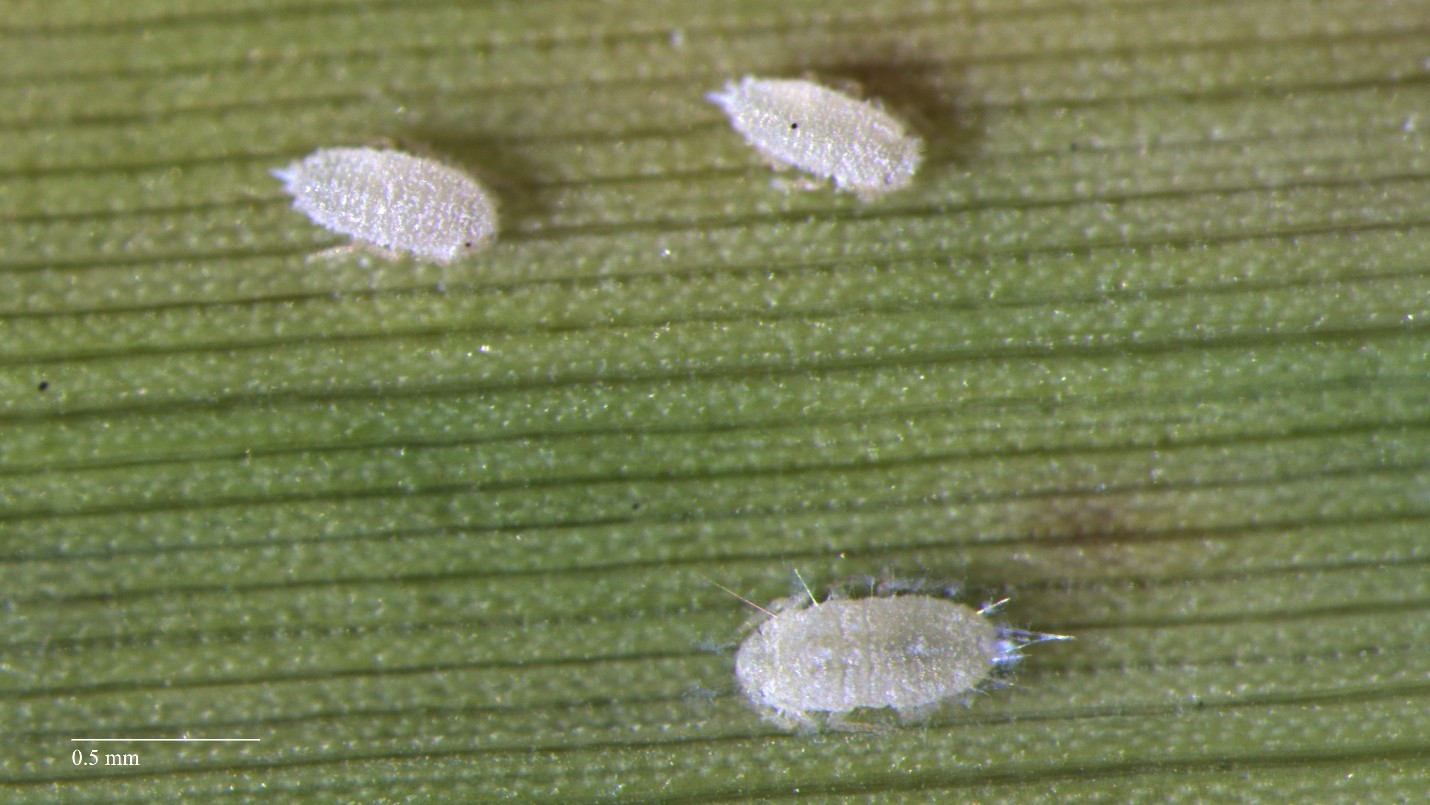
Figure 1.
First and second instar pasture mealybug nymphs. The top two mealybugs are first instar nymphs, and the bottom insect is a second instar nymph, based on the number of hairs.
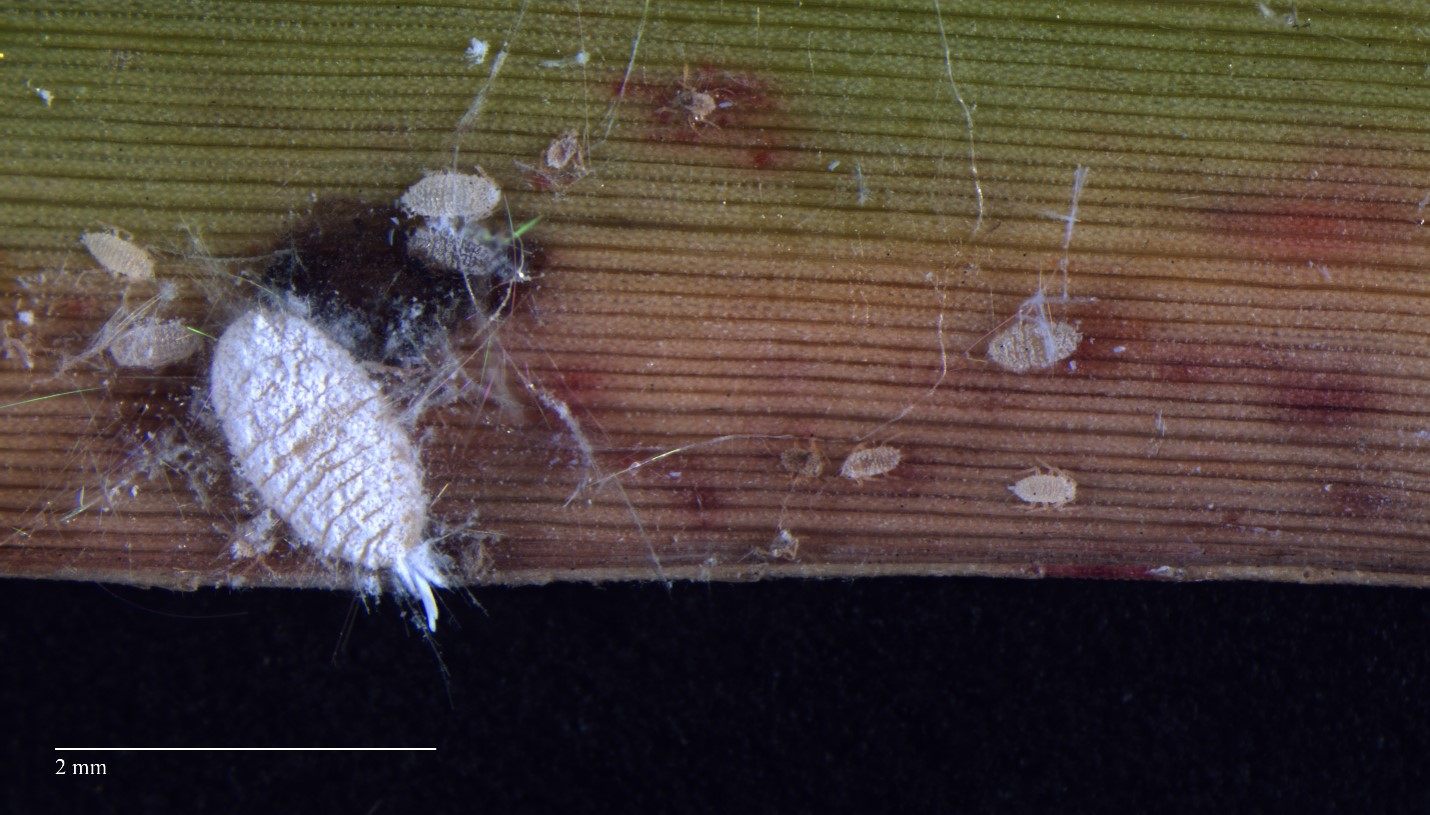
Figure 2.
Various stages of pasture mealybug. An adult female is surrounded by nymphs. The bottom right nymph and those of similar size are first instar nymphs. All others are second instar nymphs.
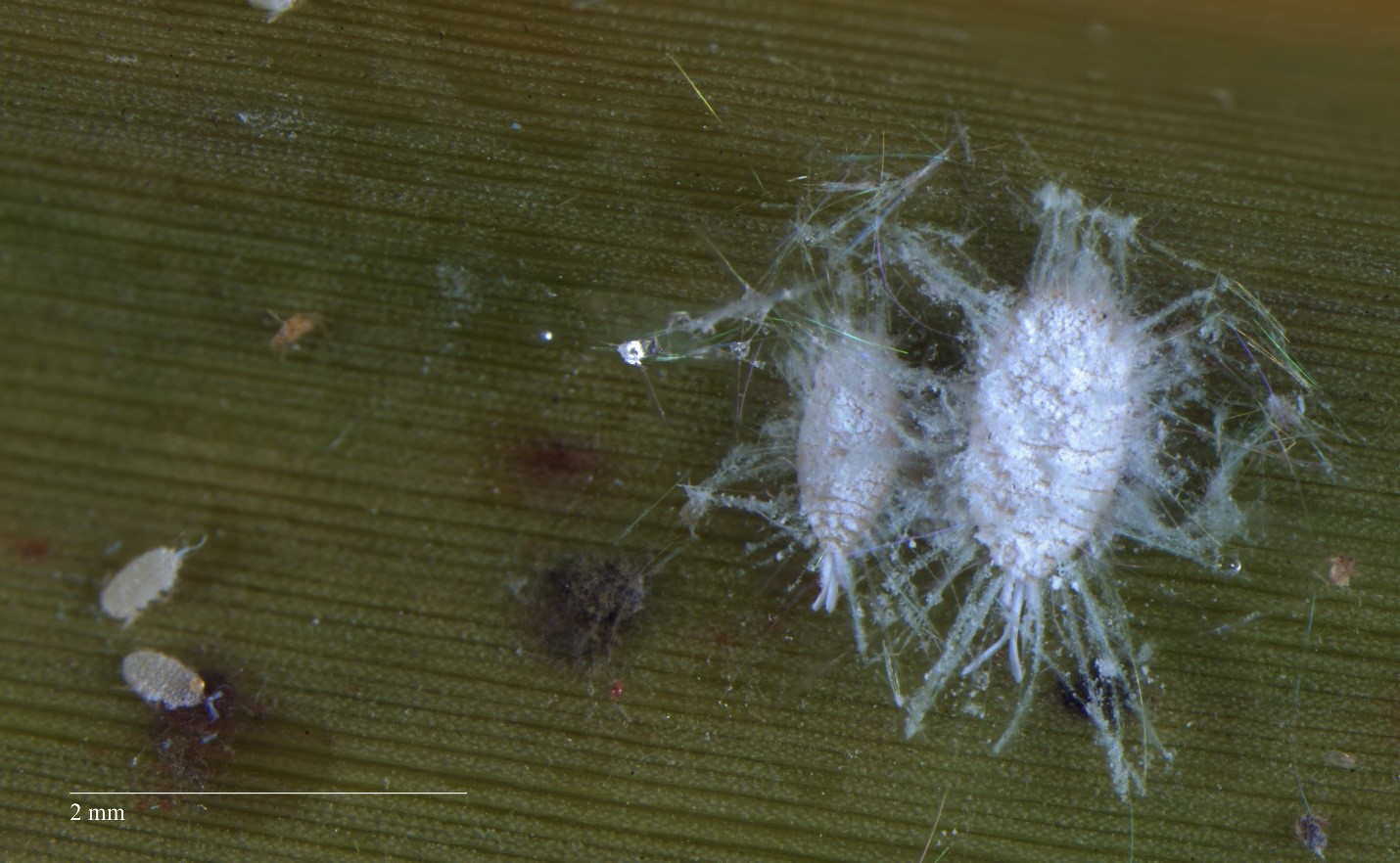
Figure 3.
Adult and various nymphal stages of pasture mealybug. The bottom two insects on the left are first instar nymphs. The rightmost individual is an adult female. To the left of it is a fourth instar nymph.
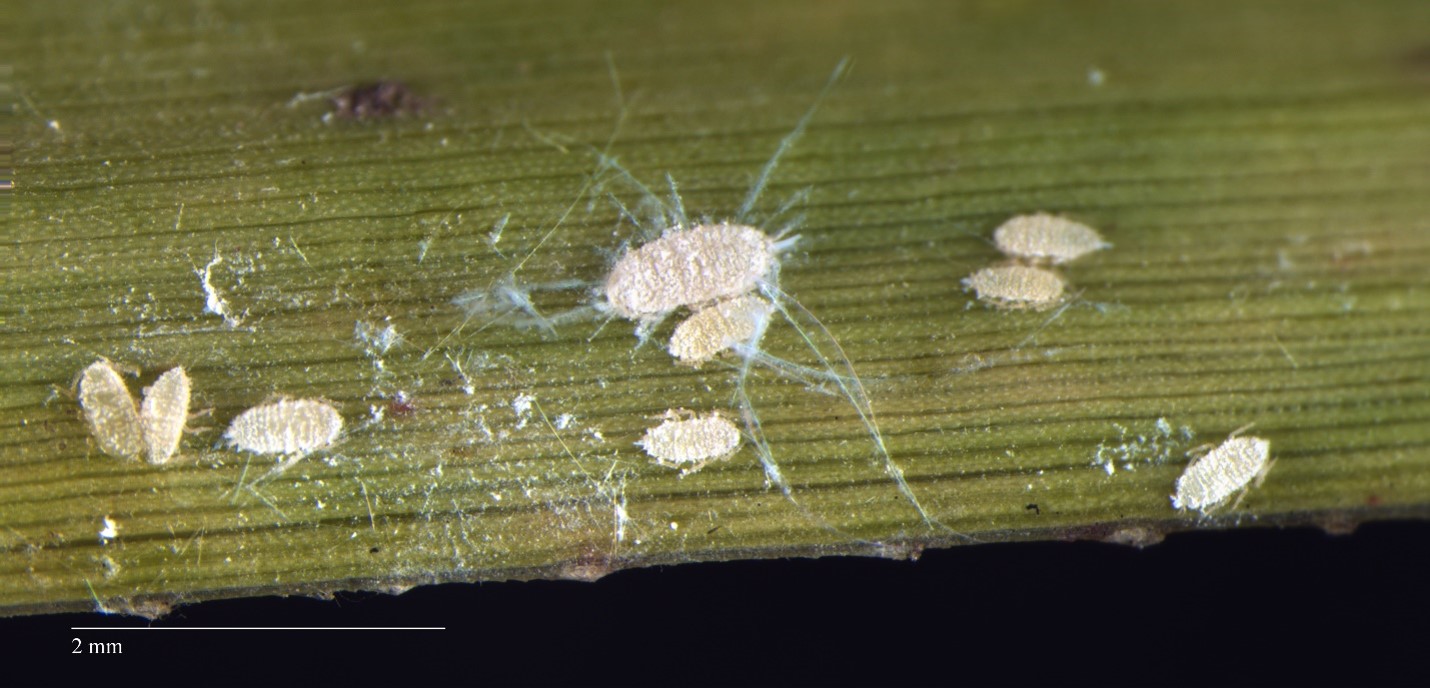
Figure 4.
A third instar nymph surrounded by second instar nymphs.
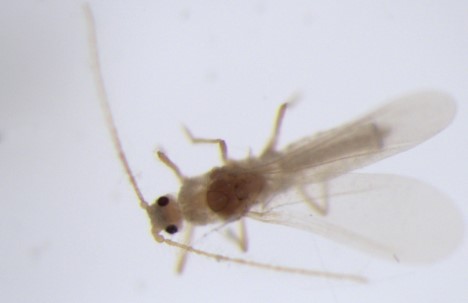
Figure 5.
Adult male pasture mealybug.
Photos by Schyler Thibodeaux and Stephen Baca
P4060
7/2/26
The LSU AgCenter and LSU provide equal opportunities in programs and employment.